Unfiltered Criticism Paris - September 2026
This selection is drawn from more than 30 exhibitions visited across Paris this month.
List below.
On a September Tuesday, late as always with my first digest of the season on exhibitions in Paris, I decided to be courageous and brave the crowds of retraités or retirees, if you prefer, and finally go and check out the Cézanne show at the Grand Palais. I was a bit wary that even the press would not be allowed in without a reservation (as during Matisse), considering the massiveness of this show and the long roster of superstars present. But everything worked out smoothly. Apparently Cézanne has not achieved the godly status of Matisse. Dommage.
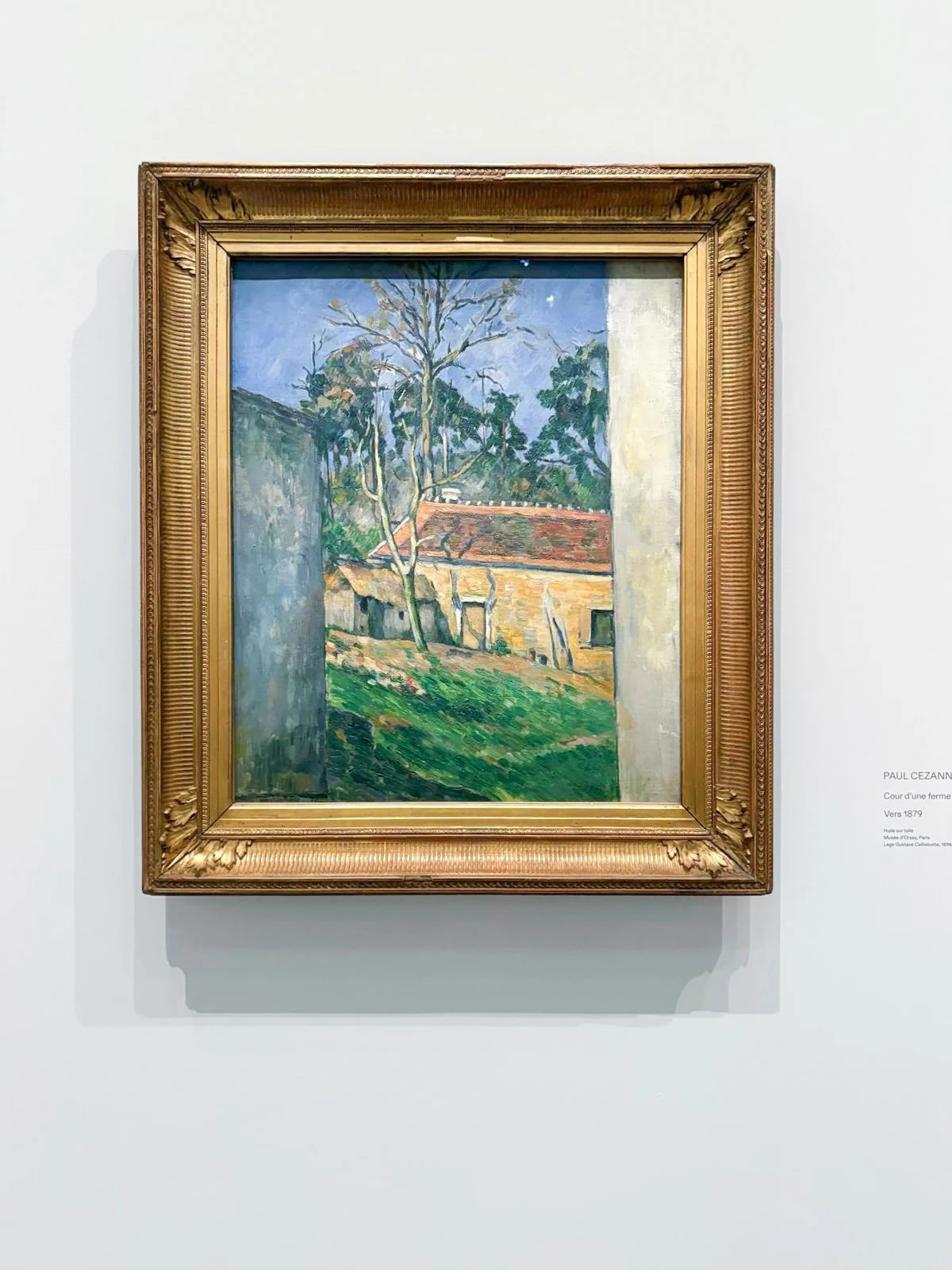
PAUL CEZANNE, Cour d’une femme, Vers 1879. Grand Palais, 2026.
See, the show is called “Cézanne and Us”, as in, there is a part of Cézanne in all of us. Sounds pretentious, I know, but when you really sit and think, the guy did create the basis for abstraction through his way of decomposing the figures and the landscapes. Not to mention that he was one of the first to openly skew perspective, ridding us of the universal visual truth of the Renaissance composed of, you guessed it, proportions and perspective. The show itself is divided across two floors. On the ground floor you have the usual suspects: Picasso, Gauguin, Matisse, but it’s on the upper floor that the exhibition starts showing some unexpected parallels between Cézanne and painters such as Martin Barré, Nicolas de Staël, Bridget Riley and David Hockney. Since our vision and taste are formed by the forms we see in images, and since so many artists have been inspired by Cézanne, I guess it’s only fair to say there is a tiny bit of Cézanne in each of us.
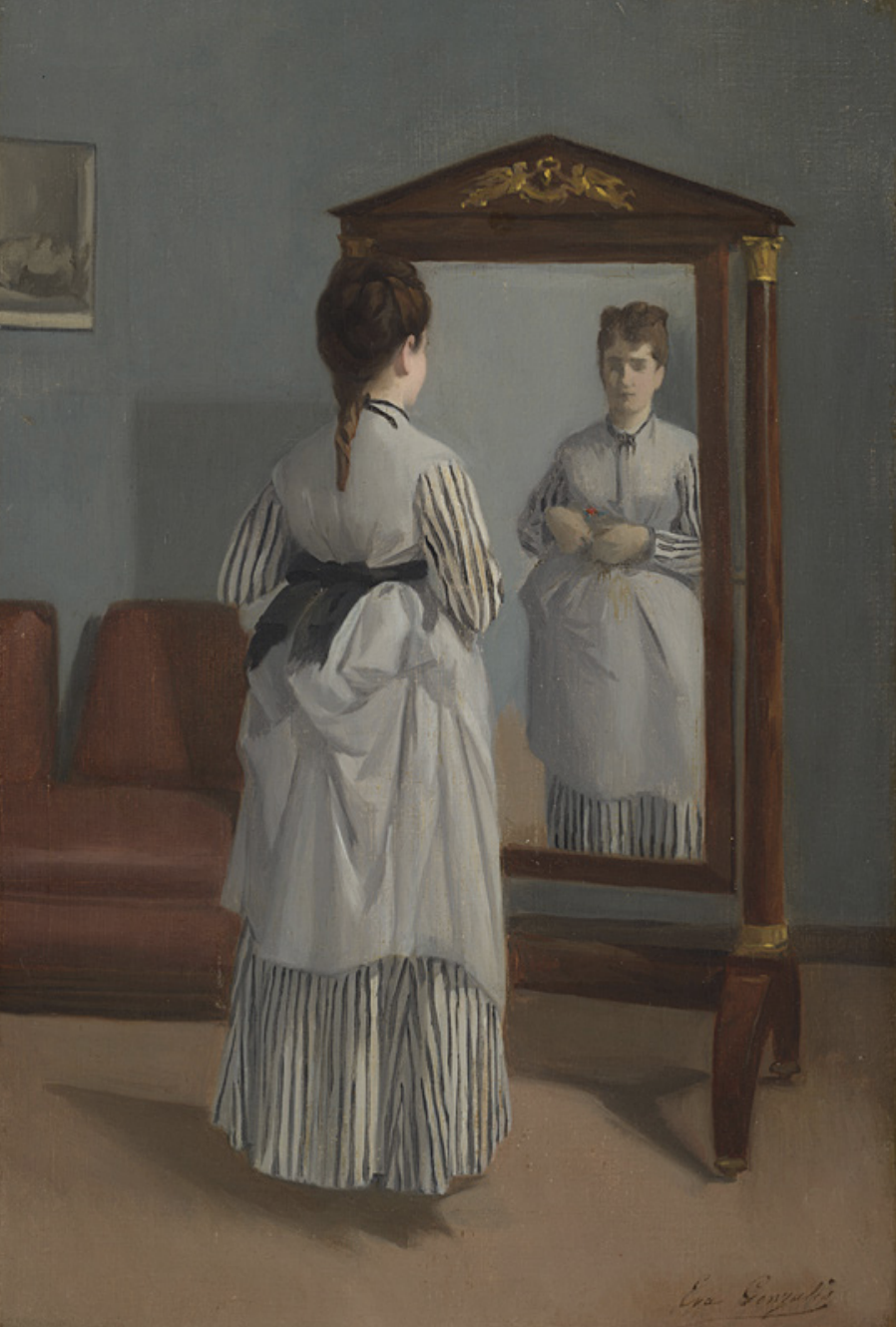
Eva Gonzalès, La Psychée, v. 1869-1870. © The National Gallery London
I did continue with the Eva Gonzalès exhibition at the Petit Palais, which I found, frankly, disappointing. It is crucial by all means to show the works of artists who are not men, but I think there is a problem in the way the museum presents this show. For a “large retrospective”, one expects a deep dive into her world, style, development, etc. Instead, we see a relatively small number of works; unfortunately, even fewer works are in what the curators claim to be the painter’s distinctive style. Instead, we see what seems like an avalanche of prints signed by Gonzalès’ husband — the printer Henri Guérard — alongside works by Manet, Chaplin, Morisot and Cassatt. I am afraid to disappoint you, but I’ll have to resort to Linda Nochlin’s seminal piece asking the question “Why Have There Been No Great Women Artists?”. I’ll propose an answer: perhaps because she began studying painting with a very conservative and boring master (with a less boring name: Charles Chaplin), because for most of her life, except when studying under Manet, she had virtually no access to subjects outside of her home (no wonder her sister is her subject in half of her paintings), and because, finally, she was 34 when she died. Indeed, her most fertile artistic period was when she was Manet’s pupil — not because she was to be his follower; in fact, she left his studio about five years later, but because Manet belonged to a society of painters, which allowed her to broaden her horizons and interact in a professional environment. Then she got married.
I wish they had framed the show as “A small show for an artist with big potential and a short life”.
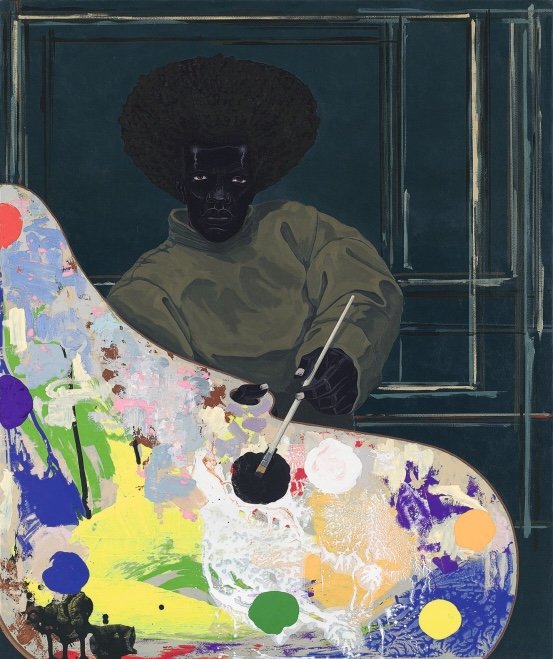
Kerry James Marshall, Untitled. Harvard Art Museums/Fogg Museum, Cambridge, MA. Richard Norton Memorial Fund © Kerry James Marshall Photo © President and Fellows of Harvard College
Lastly, there is a show in town which I recommend you run, not walk, to: Kerry James Marshall’s « The Histories » at the Musée d’Art Moderne. I hope not to shock or offend anyone here, but African American culture is not something I often relate to. I grew up in a one-race/one-culture type of environment in a post-Soviet country. Needless to say, I discovered the vastness of the post-slavery and post-colonial context much later in my teenage years, and ever since I’ve been an outsider. I guess everyone’s got to find their own corner in our identity politics discourse. Nonetheless, Kerry James Marshall succeeds in painting Black women and men while touching upon the fear and the pride, the horror and the glory. He opens up the soul of what it means to be Black in America, without any kind of exaggeration, but also without minimizing it. I only got the ick once, in his series of imagined portraits of heroic Black people who were never painted during their lives. Amongst a myriad of men (Scipio Moorhead, John Punch), he paints Harriet Tubman, the brave woman who helped organize the escape of many enslaved people into free states. Yet instead of emphasizing her heroism, he imagines her on her wedding day, once again locking women into a position of domesticity instead of empowerment and independence. It was perhaps not intended as such, but none of the other men he portrayed were shown with their wives.
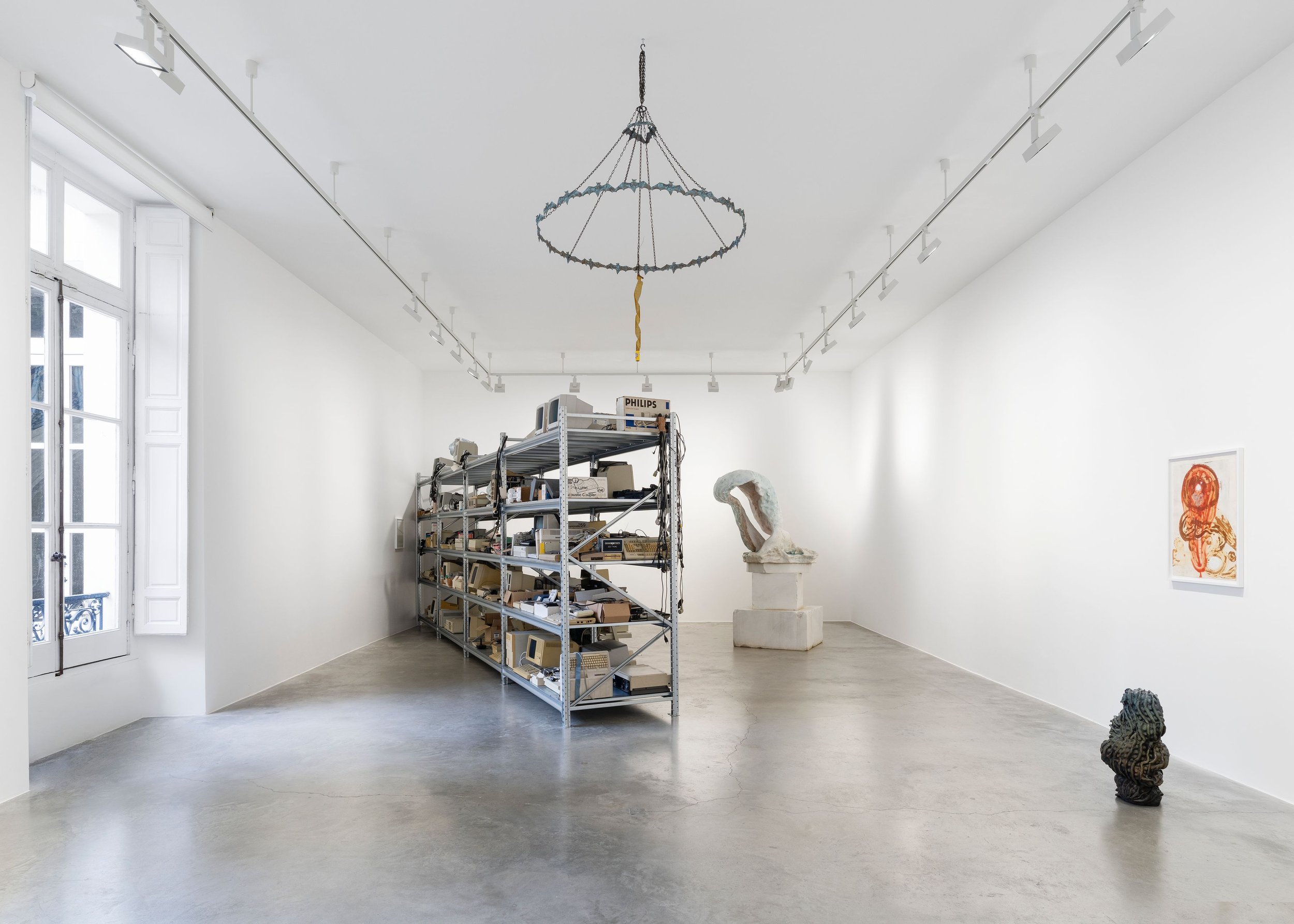
Installation view, Johan Creten, Les Chiens de Pavlov, Perrotin. Paris, 2026.
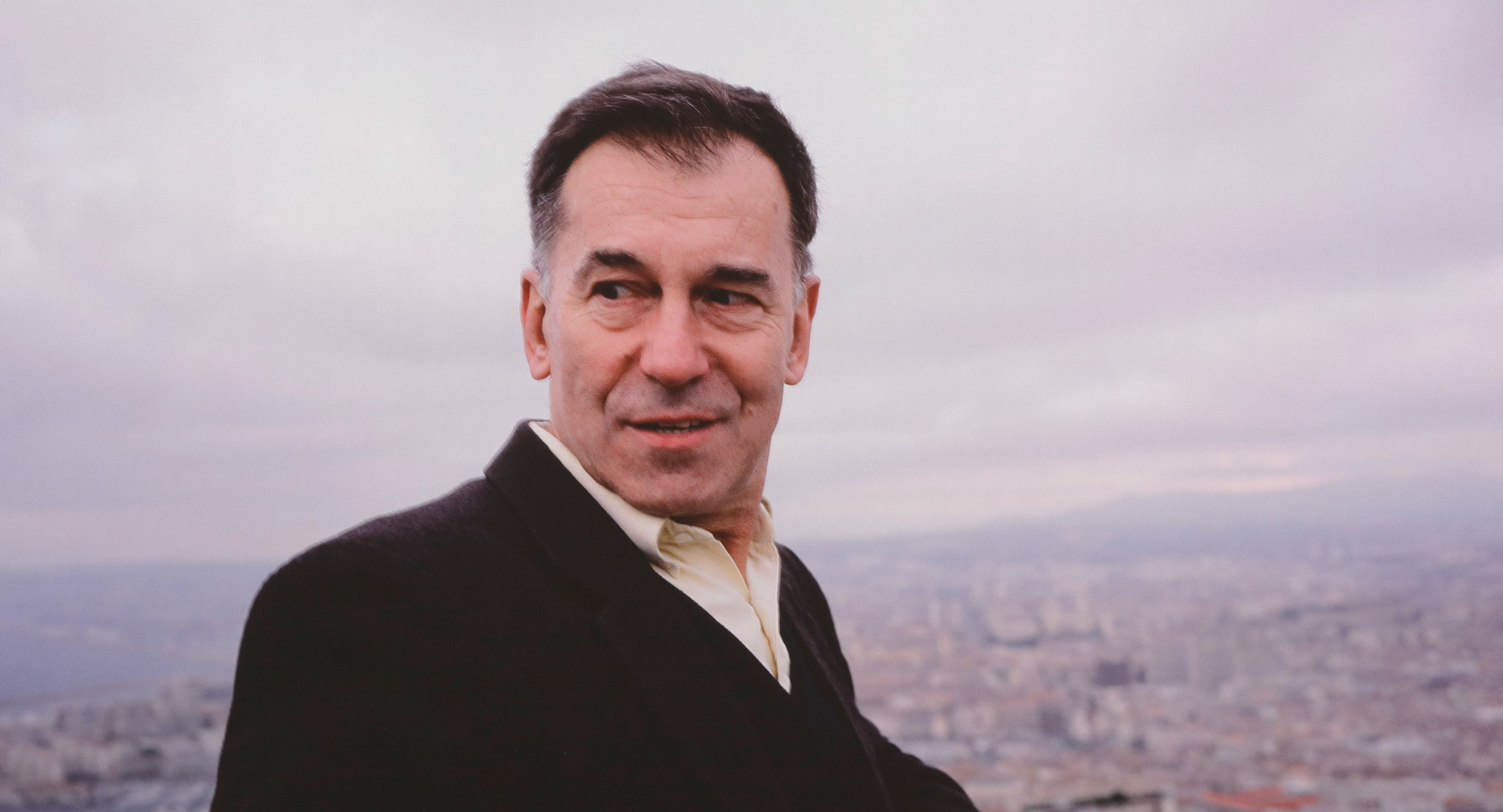
Nan Goldin, Yvon at Notre-Dame de la Garde, Marseille, 1996 (detail). © Nan Goldin
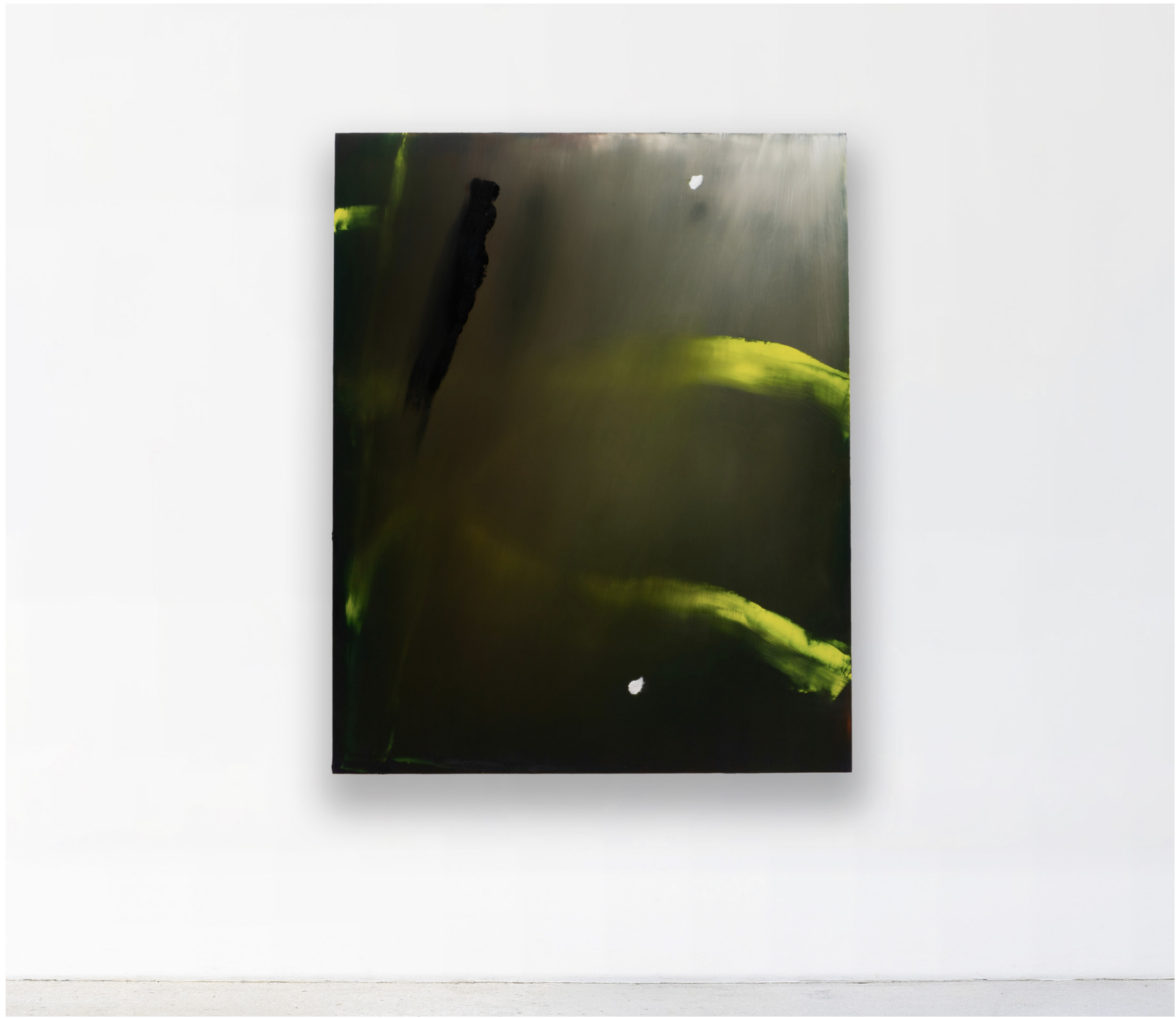
Yasuko Hirano, There you are, 2025. Galerie Frank Elbaz, Paris, 2026.
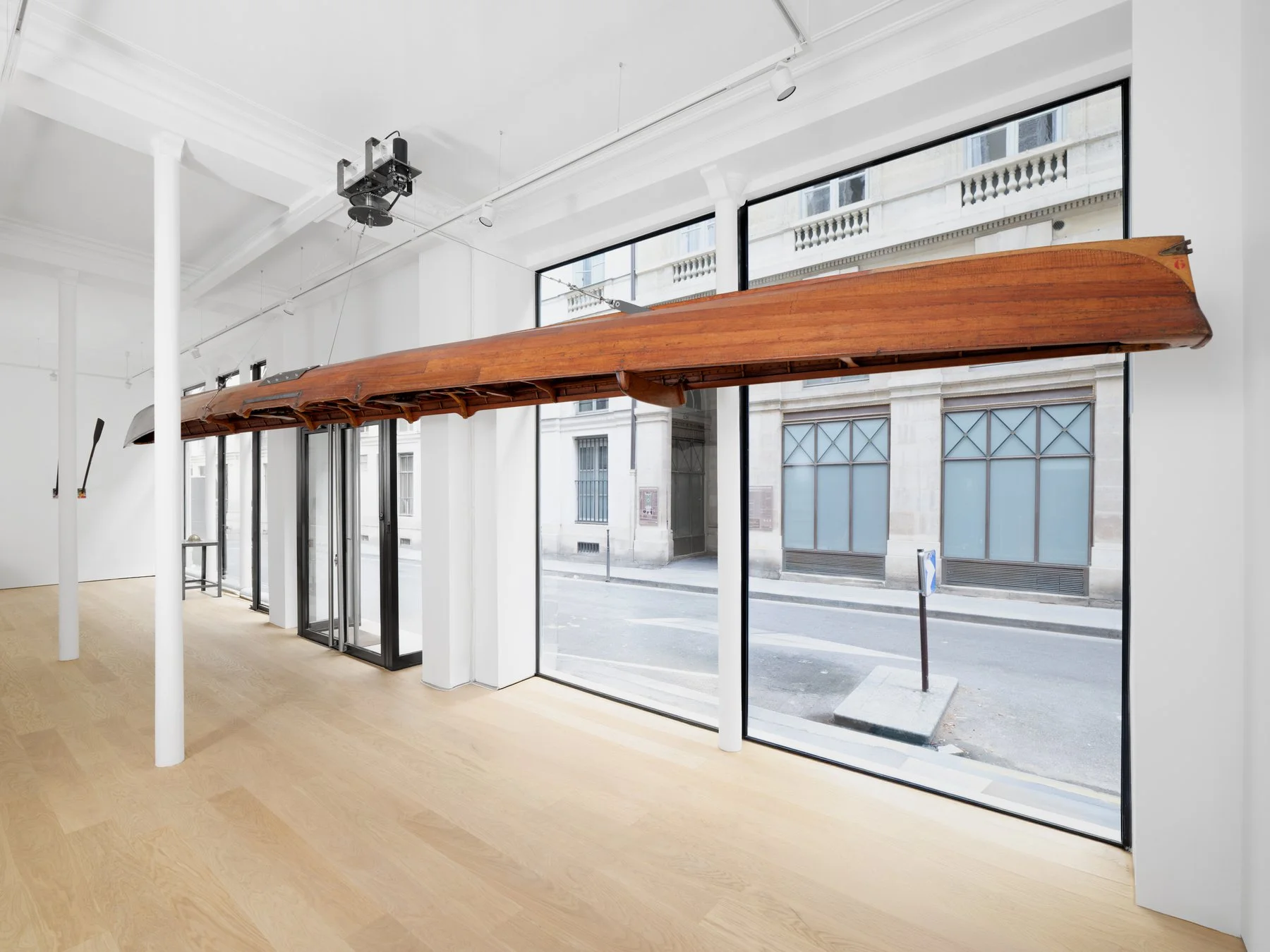
Installation view of Leonora Carrington’s solo exhibition, Almine Rech Paris, 2026. © 2026 Estate of Leonora Carrington / ADAGP, Paris - Courtesy of Almine Rech, Consejo Leonora Carrington and rossogranada - Photo: Nicolas Brasseur / ‘Laberinto’, 1991 - Private collection / O. 2026 Estate of Leonora Carrington / ADAGP, Paris
Plenty of other stuff to see in galleries, but I will let you discover that on your own as Substack limits my rambling.
Johan Creten at Perrotin has half a wild show until Oct 10 — one amazing room with his father’s old computer collection; the other spaces were less interesting. Zwirner shows works in collaboration with the Galerie Yvon Lambert by artists who exhibited in this same space over the last 40 years — there are some superstars, obviously. Frank Elbaz shows Yasuko Hirano; the transparency of the various layers is impossible to describe; you have to see it. And of course, Leonora Carrington at Almine Rech gives us the rare occasion to see museum pieces outside the museum. Special mention to Christophe Gaillard with « Les Objecteurs », a show of many jewels (Arman, Spoerri, Pierre Ardouvin, David Douard) that closed last week.
See you after Art Basel.
Bisous
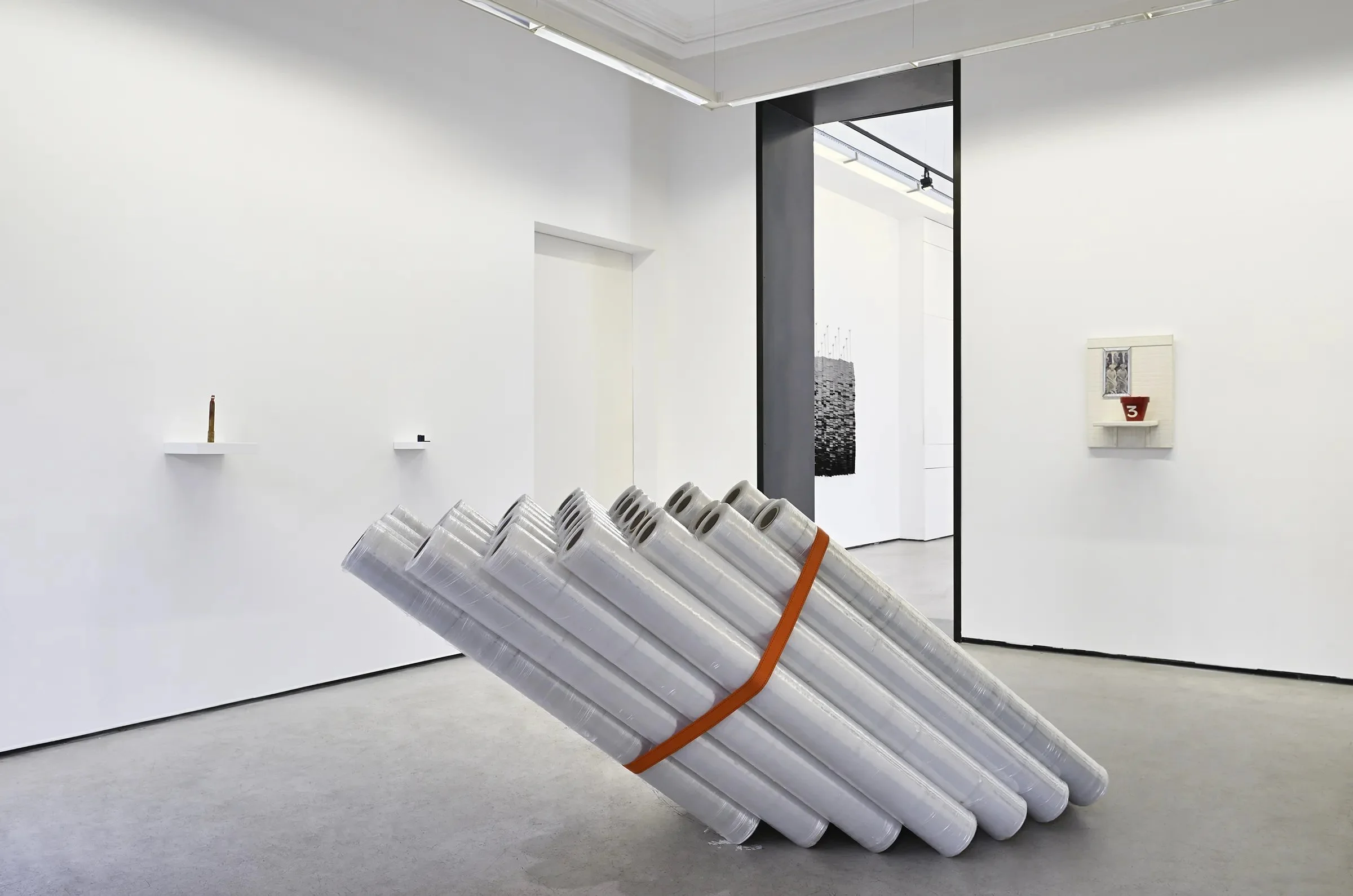
Vue de l’exposition collective Les Objecteurs, Galerie Christophe Gaillard, Paris, 2026. ©Tous droits réservés aux artistes et à l’ADAGP ; Photos : Rebecca Fanuele.
Seen this month:
Au 108 rue Vieille du Temple, A Shared Legacy with Galerie Yvon Lambert David Zwirner
Romain Bernini, Suzanne Tarasieve
Tiphaine Calmettes, Project room, Suzanne Tarasieve
Meuser, Ruttkowski;68
Rejouer, revivre, sans fin, Galerie Olivier Waltman
Sarah Tritz, Je suis une économie du désir, Florence Loewy
Ignasi Aballí, Date et lieu incorrects, Martine Aboucaya
Leonora Carrington, Almine Rech
Yasuko Hirano, Anthem, Galerie Frank Elbaz
Frédéric Prat, Double fond, Galerie Richard
Johan Creten, Les Chiens de Pavlov, Perrotin
Alma Allen, Perrotin
Lee Bae, Perrotin
Bernard Quesniaux, Hotel des définitions, Galerie Alain Gutharc
Claudio Coltorti, Jousse Entreprise
I am fine, Danyzs Gallery
Xiao Guo Hui, MASSIMODECARLO Pièce Unique
Simone Fattal, Des villes au fond d’un lac, Musée d’Art Moderne
Eva Gonzalez, A Free-Spirited Artist, Petit Palais
Cézanne, Cézanne and Us, Grand Palais
Kerry James Marshall, The Histories, Musée d’Art Moderne
Haunt Me, Sultana
Morgan Courtois, Essence, Balice Hertling
Bram Kinsbergen, After The Procession, Galerie Pact
Emmanuel Beguinot, Galerie Derouillon
Wei-Wei Chu, Weightless Season, Palm Gallery
Adil Levain-Chavanon, Allamouni, Galerie C
Les Objecteurs, Galerie Christophe Gaillard