This selection is drawn from more than 30 exhibitions visited across Paris this month.
List below.
If you’ve spoken to me in the last 5 years, you might have heard me bragging that Paris is the best place in the world (for the arts) right now. I don’t know how long the wave is going to last, but while it’s here, I’m riding it.
I thought I’d send a review after art week, which has not yet begun, but there is simply too much to see and talk about.
So, since most of the institutional shows have already opened, yours truly took the time to go and check them out so that you know what you’re getting for your precious time while travelling to our lovely city.
Quick announcement while I have your attention, Zéro Deux launches issue 118 at the Centre Culturel Suisse on Monday, October 19th (5–8 pm). It has a focus on Switzerland, which I introduce through a lengthy article. Come join us!
LET’S GO:
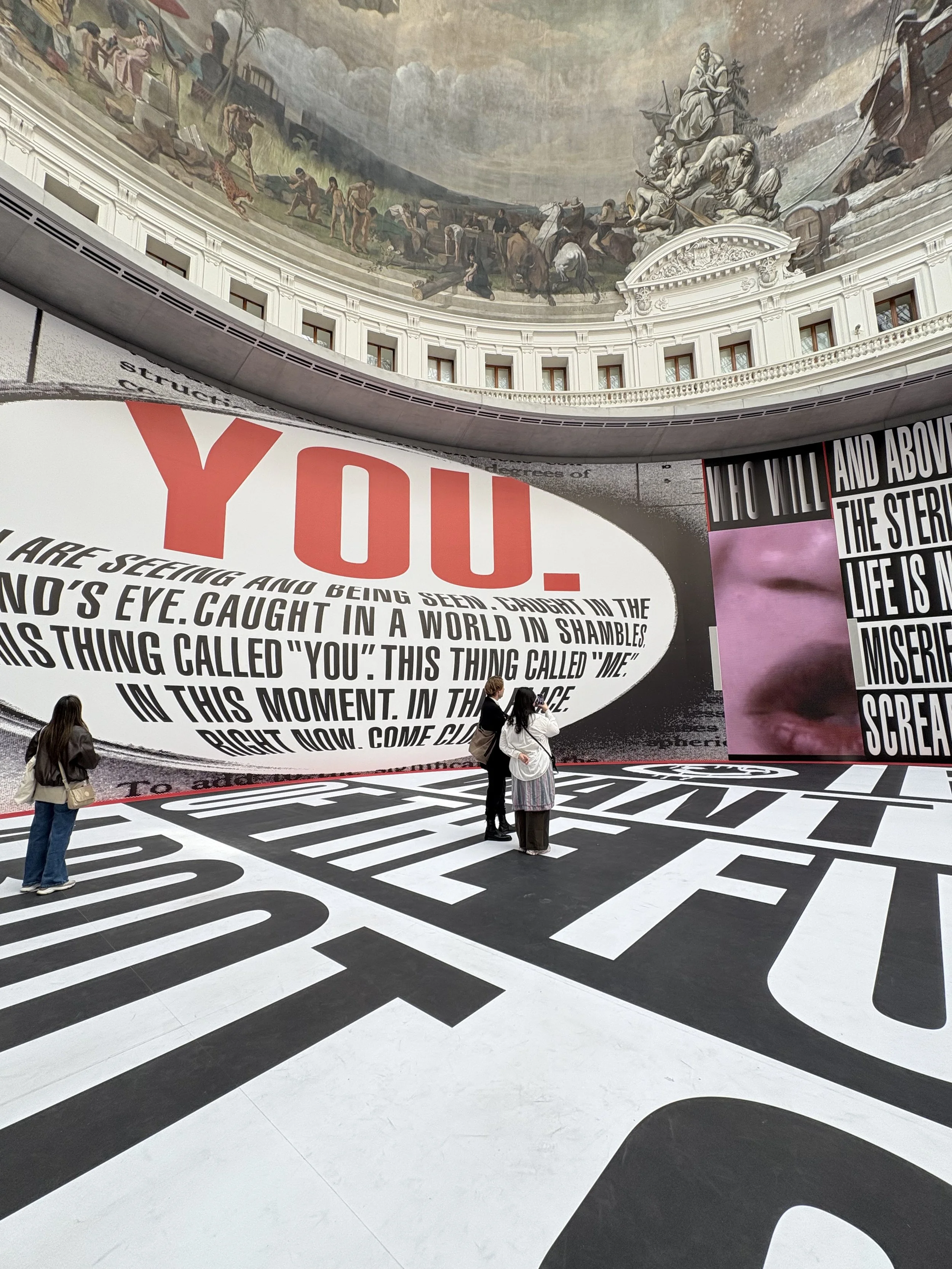
Exhibition view, The History of Tears, Barbara Kruger. Bourse du Commerce, 2026.
First things first, the private foundations are flourishing and taking over the spotlight. Pinault’s Bourse de Commerce did an outstanding job with the show Remember Me. The title is inspired by a small 1988 work by Barbara Kruger, who also takes centre stage in the rotunda with the installation The History of Tears. Kruger’s immersive work is captivating, impressive and loud. The text in the murals refers to contemporary Orwellian perceptions and at the same time puts the viewer in the center. It asks you to recall who you are, and reminds you that the world is watching you. It is both contemporary and visionary, a mix of Black Mirror, Big Brother and Guy Debord’s Society Of The Spectacle. All in all, the work ticks all the boxes of what a good work is, which could result in something too predictable to be interesting, and yet it does manage to escape the tediousness of predictability.
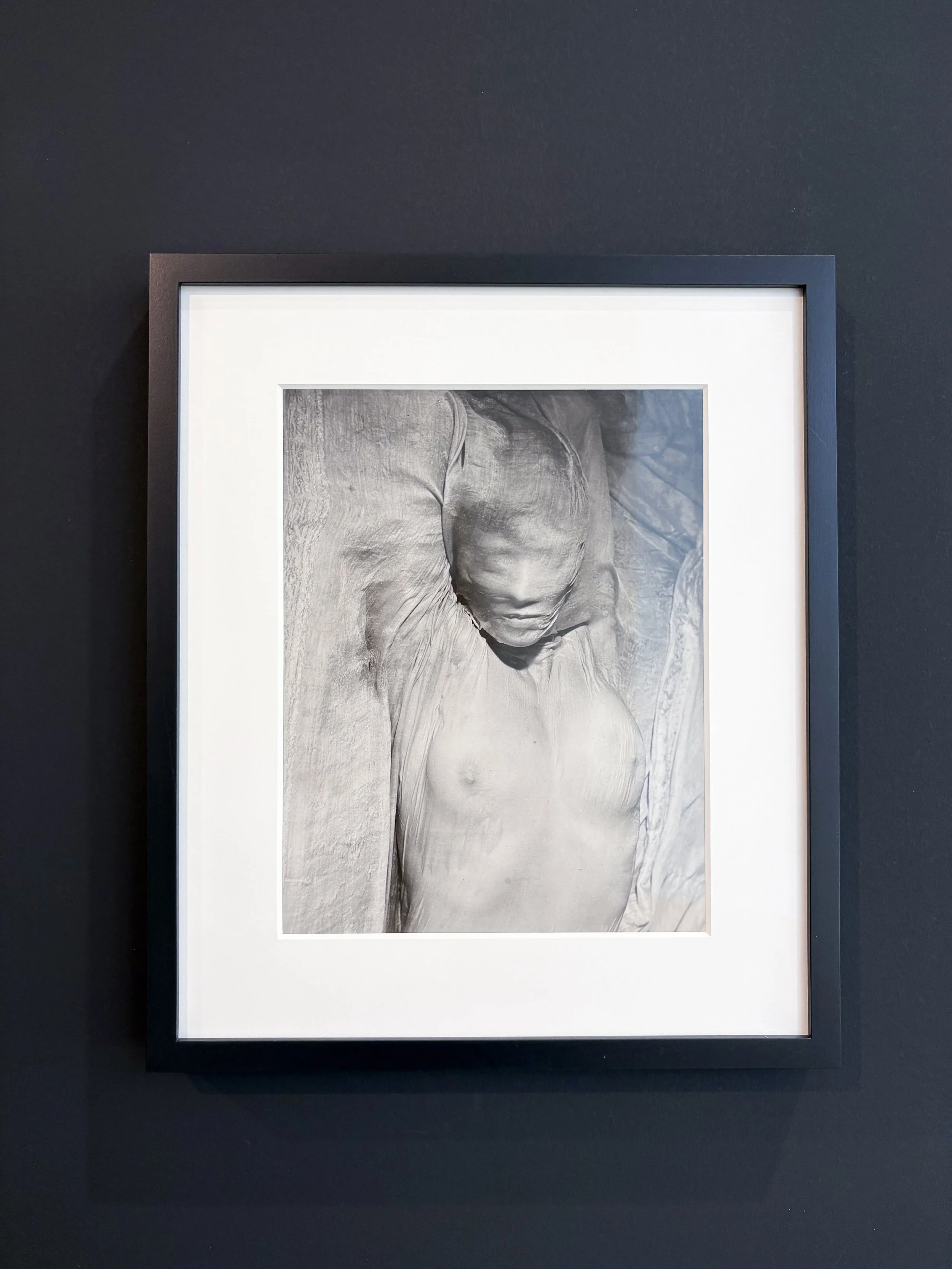
Erwin Blumenfeld, Nude under Wet Silk, 1937
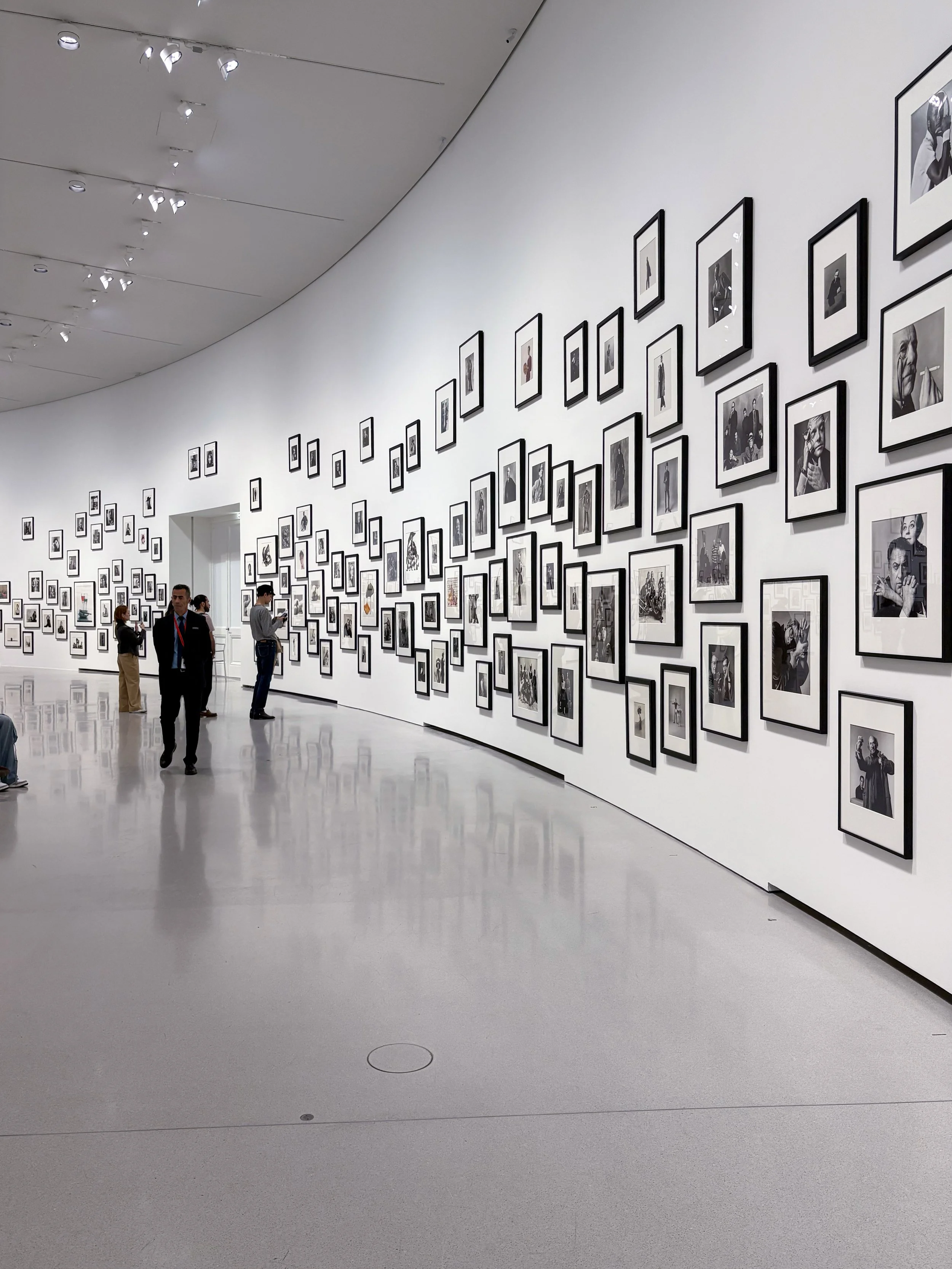
Exhibition view, Irving Penn, Le monde selon Penn, Bourse du Commerce, 2026
The rest of the show, dedicated to photography, is built around the 200th anniversary of the invention of the medium, and it is an absolute gem. Man Ray, Dora Maar, Richard Avedon, Annie Leibovitz, Dorothea Lange — all the superstars are present. My favorite: Erwin Blumenfeld’s Nude under Wet Silk. The show honors the body, its parts, its presence and disappearance. I was not a big fan of the focus on Raymond Depardon’s portrait of French landscapes. On the other hand, Gallery 2, dedicated to Irving Penn, was excellent and refreshing. About 450 prints arranged by everything but chronology: topic, shape, subject.lectionneur-créateur, Fondation Louis Vuitton, 2026.
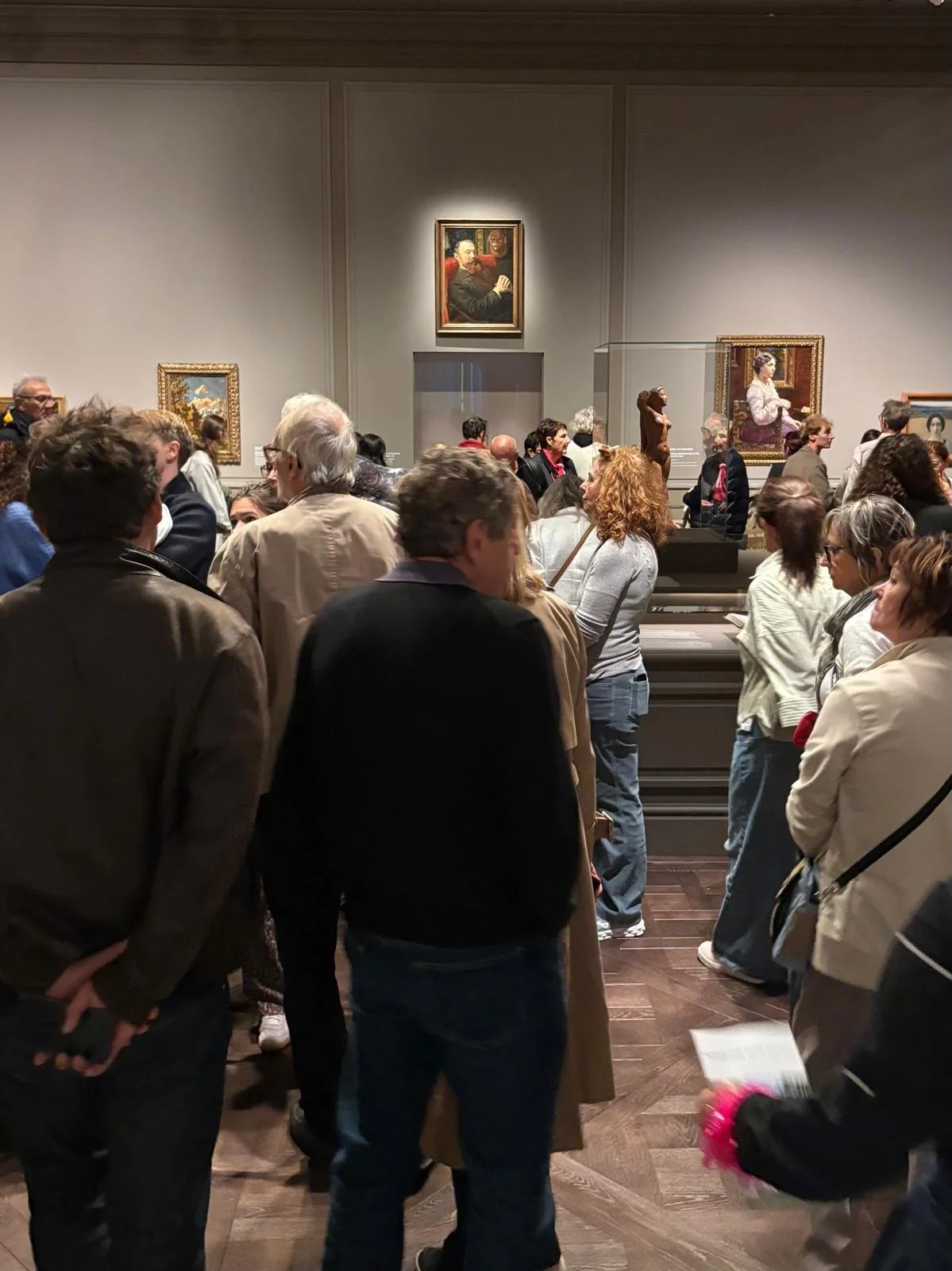
Exhibition view, Gustave Fayet, collectionneur-créateur, Fondation Louis Vuitton, 2026.
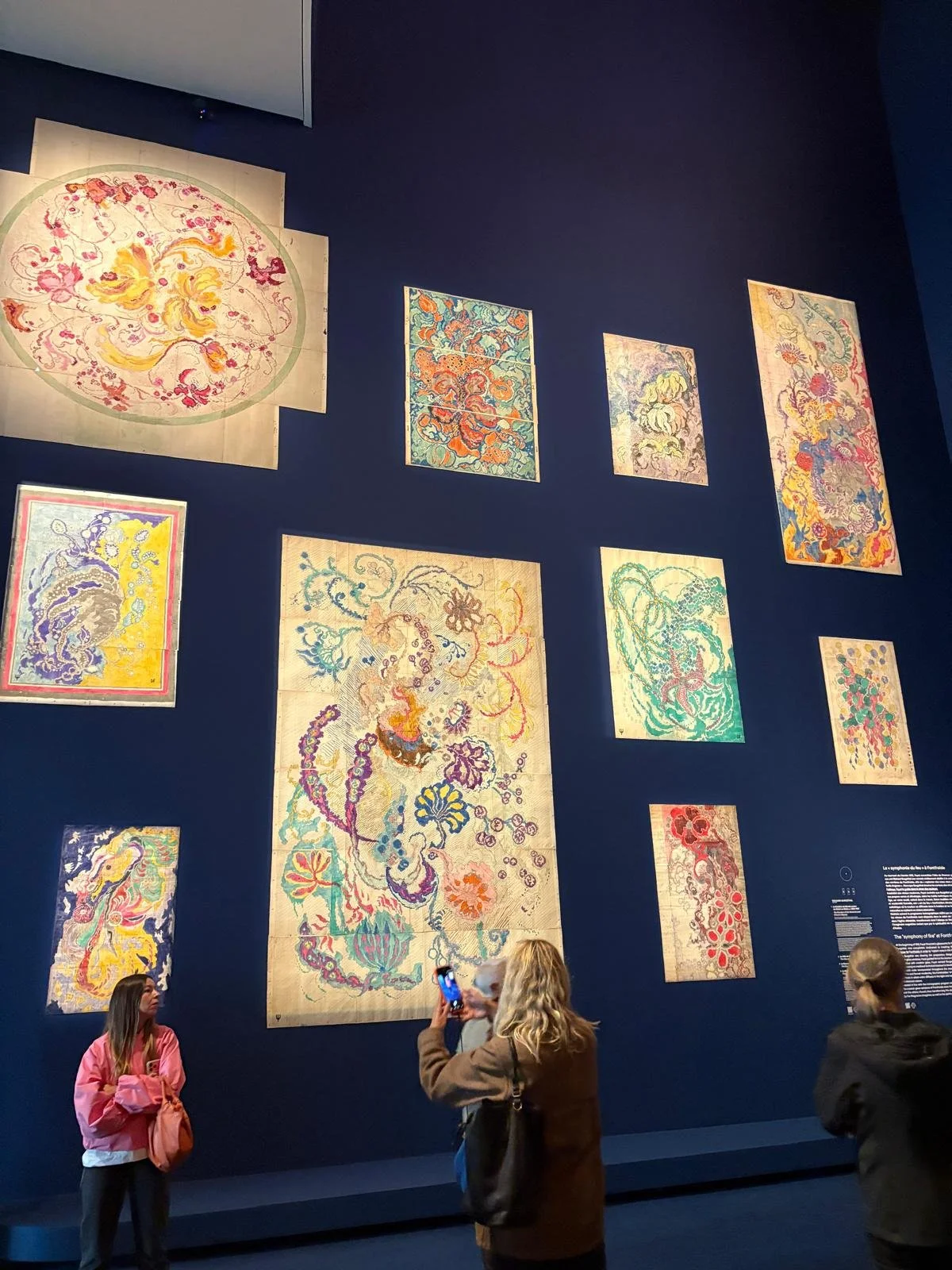
Exhibition view, Gustave Fayet, collectionneur-créateur, Fondation Louis Vuitton, 2026.
At Louis Vuitton the vibes are very different. This season the foundation has dedicated all four of its floors to a figure unknown in contemporary art circles — that is, unknown if you don’t get to hang out much in the southern city of Béziers, a place that, as many of you know, I have been calling a second home for the last few years. I digress. The focus of the show is Gustave Fayet, a Biterrois (inhabitant of Béziers) by origin, a painter by creative calling, an entrepreneur by social expectations, a sculptor by interest and a designer by discovered talent. The one constant throughout these many lived lives was his collection. Fayet gathered a remarkable group of works by post-impressionists, fauvists, Nabis, modernists and symbolists (am I forgetting any “ists”?). Paul Gauguin and Odilon Redon each have a dedicated floor.
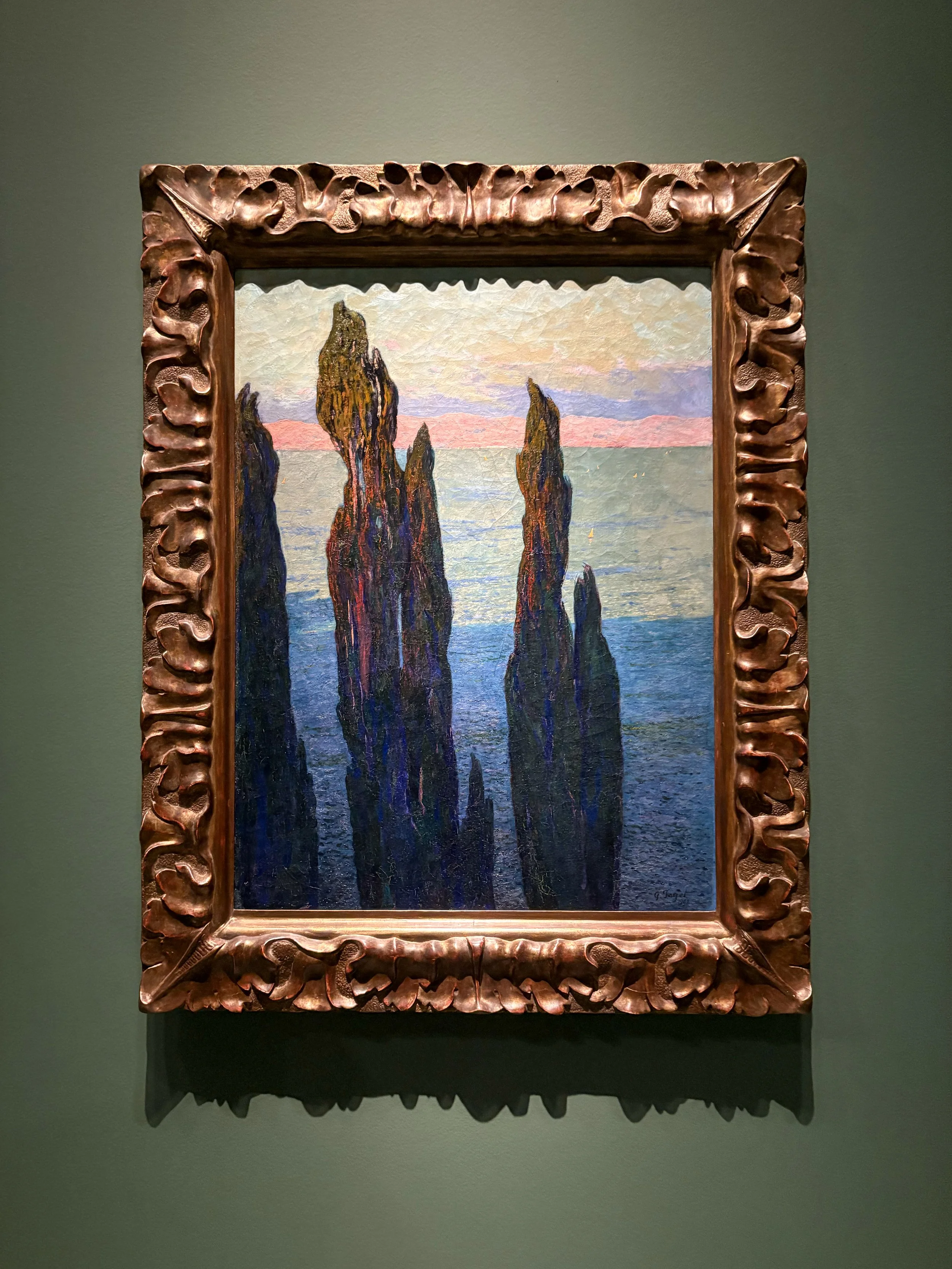
Gustave Fayet, Les Cyprès Bleus, 1902. Fondation Louis Vuitton 2026.
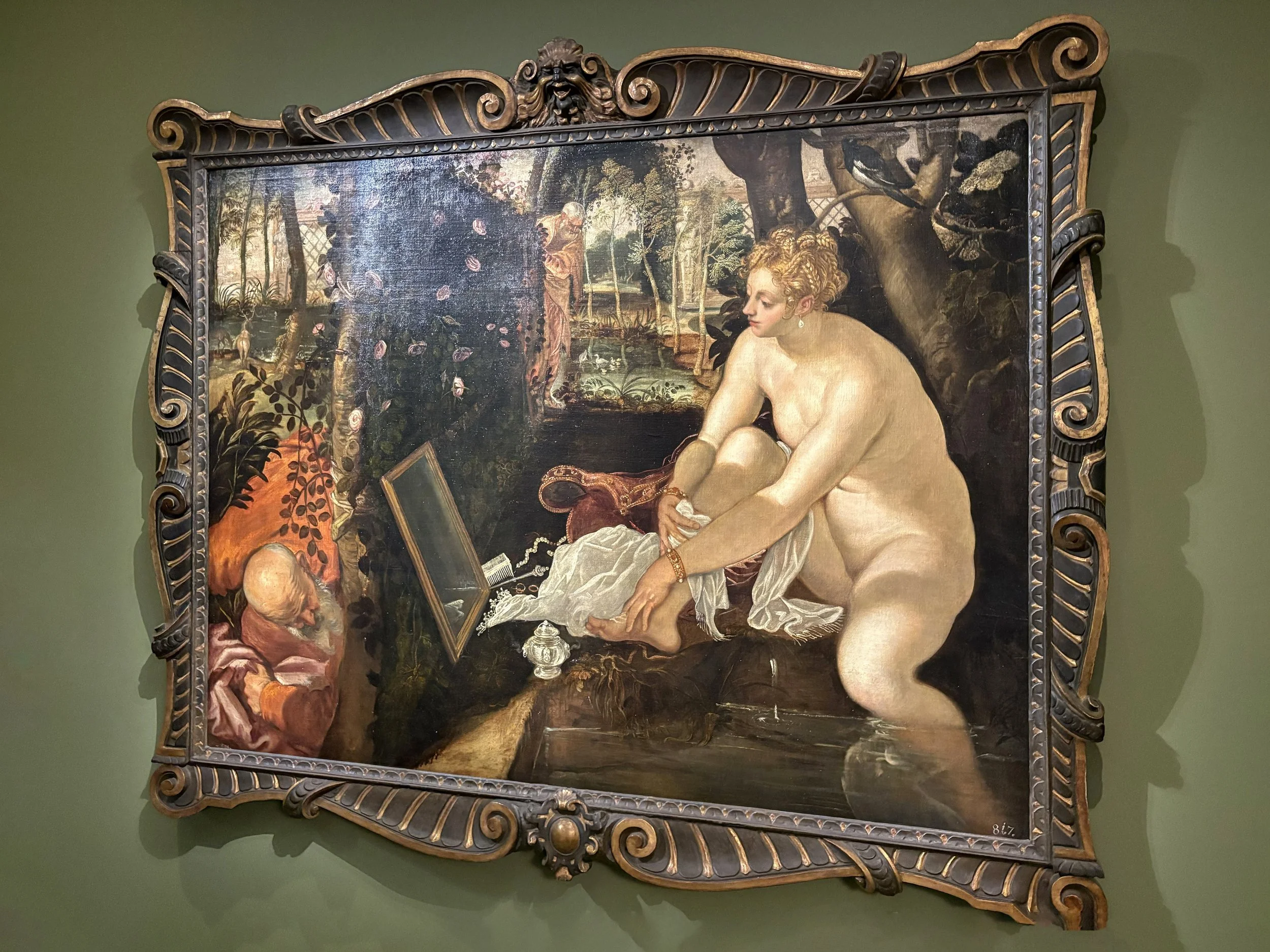
Jacomo Robusti (Le Tintoret), Suzanne et les Vieillards, 1565. Musée Jacquemart-André, 2026.
Personally, what moved me the most was Fayet’s work itself. He strikes a note with my love for stylized figurative paintings, bold colors, and slightly less-than-straightforward subjects. Essentially, Fayet’s art was a combination of the many artworks he collected. Everything is a remix.
An anecdote I learned is that Odilon Redon told Fayet to stop painting, and he listened! I think Redon could have been jealous.
For lovers of classical painting outside the contemporary realm, you have both Tintoretto at the Jacquemart-André and Zurbarán at the Louvre. My honest take is the following: unless you are a die-hard fan of Tintoretto, don’t bother to go see the show. The exhibition spaces are small, tight and always crowded. The quality of the works in the show is not that impressive. It is hard to reduce a fresco master to a few framed pieces. Sure, you have some great paintings (his version of Susanna and the Elders and the Danaë), but I would save my curiosity for some of his in situ works next time you go to Venice.
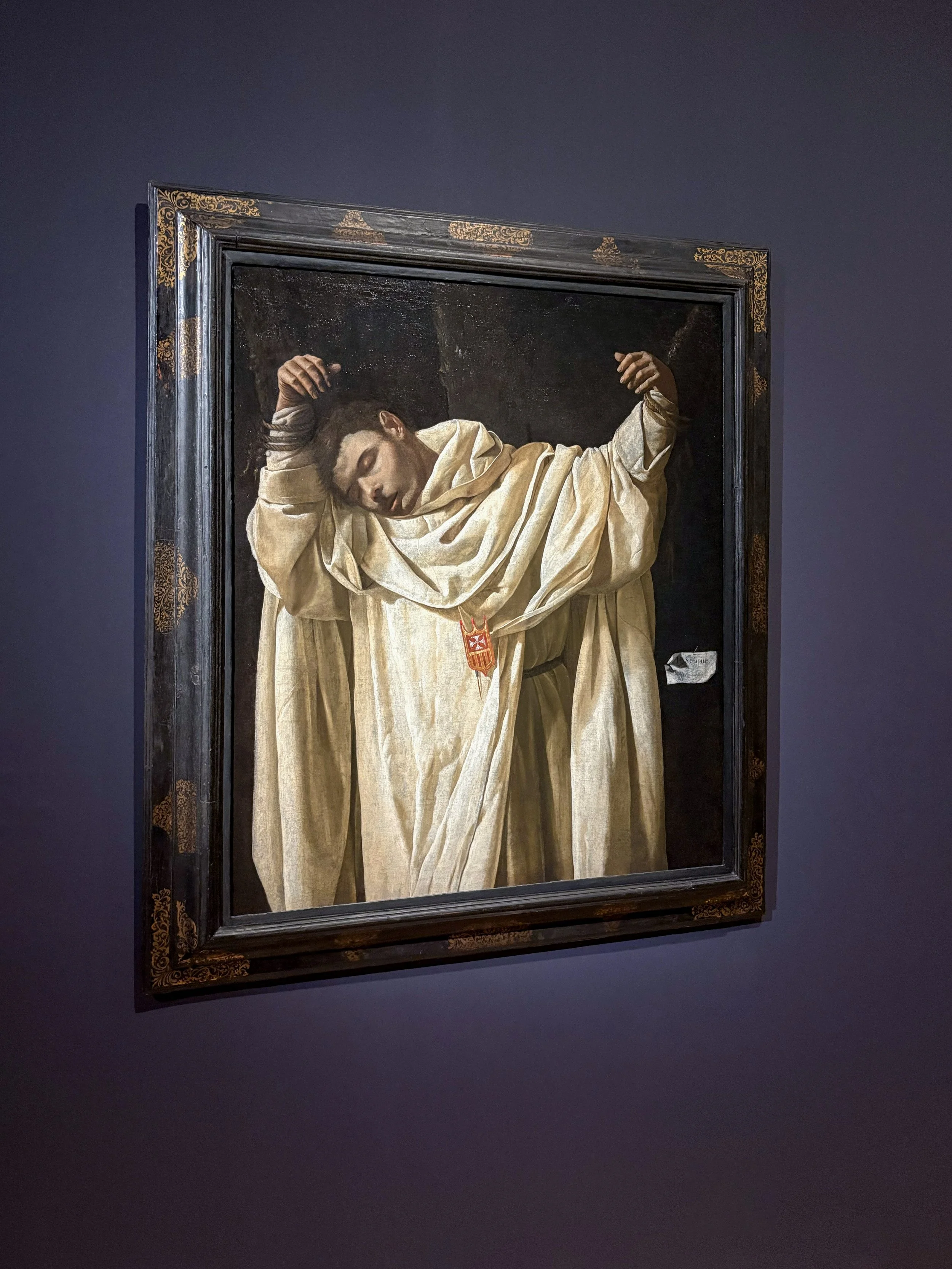
Saint Sérapion, Francisco de Zurbarán, 1629. Musée du Louvre, 2026.
Zurbarán, on the other hand, was superb. I had already gotten a taste this summer at the Prado, but the Louvre really managed to create a great story following the career and life of the painter, as well as showing a wide variety of works. Zurbarán was a contemporary of the Golden Age Baroque painters, and yet his work is impregnated with stillness. The exhibition greets you with a Jesus on a cross hung in a semi-rotunda. They say that when this painting first hung in the choir of the church of the San Pablo de Real Monastery, Zurbarán’s contemporaries were unsure whether the work was a painting or a sculpture. Zurbarán’s minimalist compositions, with a strong focus on the human figure, allow for a closeness to the subject. The backgrounds are so bare that one wonders if this isn’t the painter’s interpretation of sacred space. His small still lifes preceded Chardin, Manet and Morandi and are exquisite.
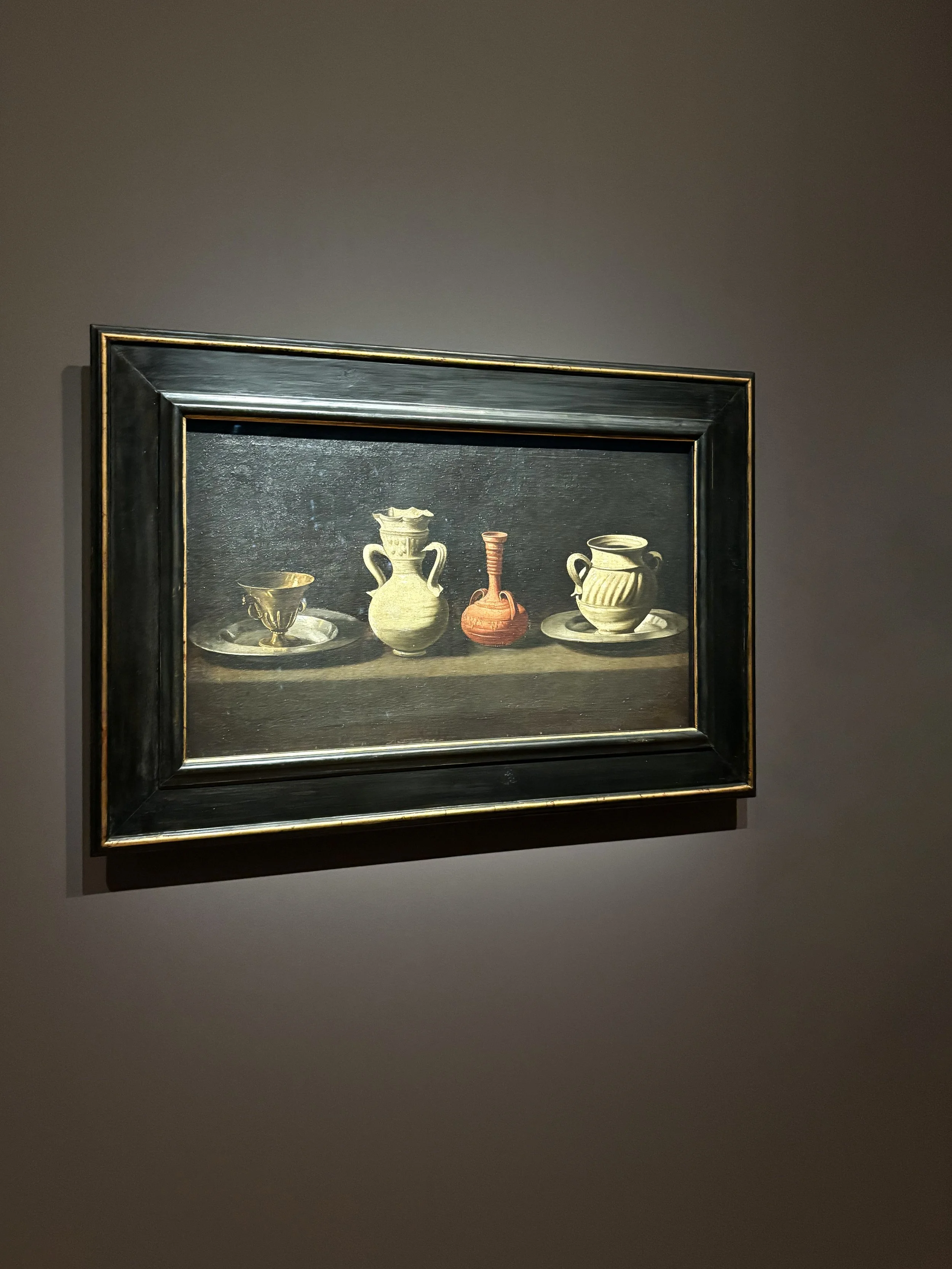
Nature Morte aux Récipents, Francisco de Zurbarán, 1650. Musée du Louvre, 2026.
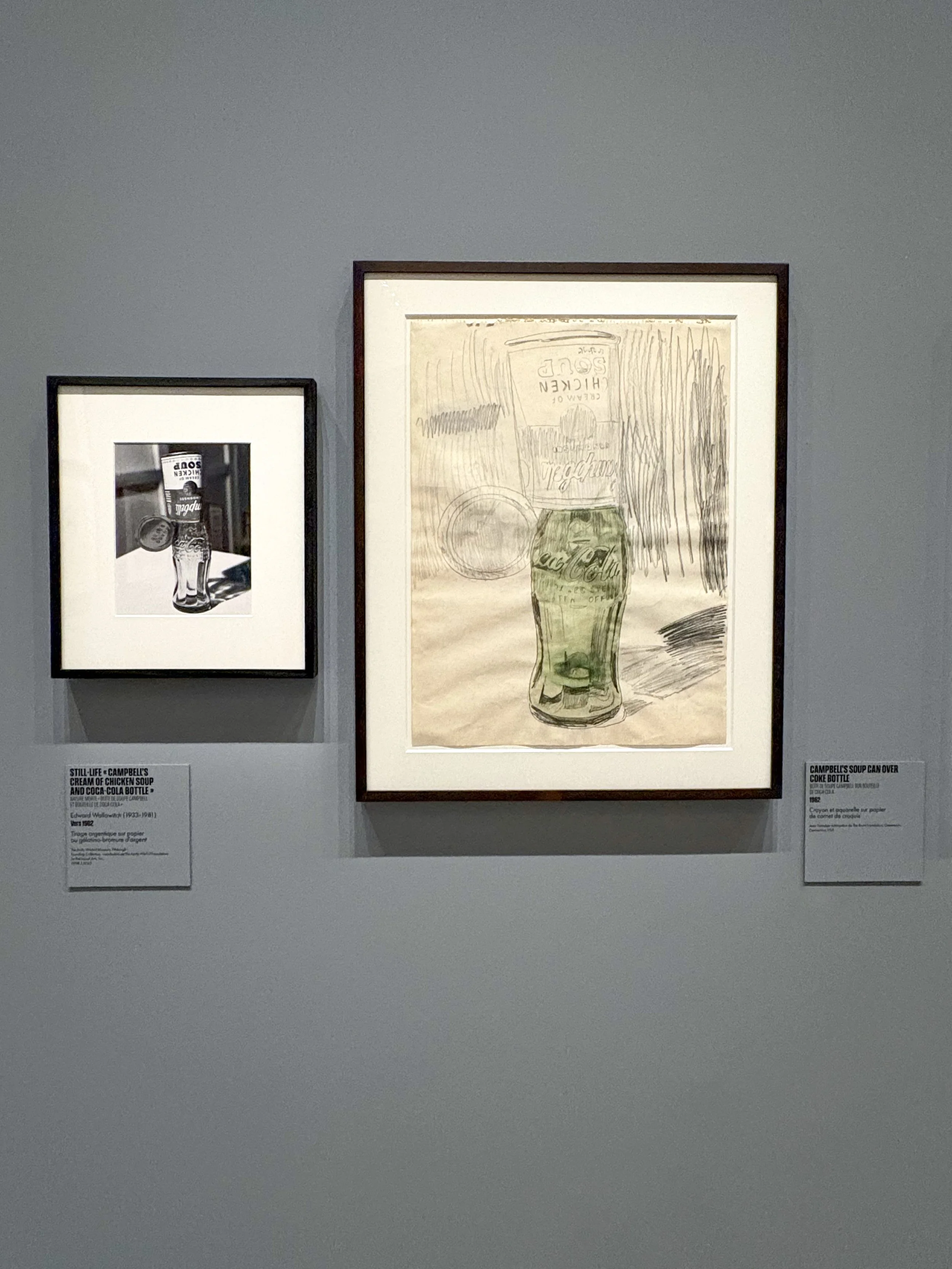
Exhibition view, La ligne et l’image, Musée du Luxembourg, Paris, 2006. Left: Andy Warhol, Still Life, Campbell’s cream of chicken soup and Coca-cola bottle, 1982. Right: Andy Warhol, Campbell soup can over coke bottle, 1982.
Andy Warhol was never somebody I felt very close to. His criticism of capitalist society comes with what feels to me like very little self-deprecation, leaving the viewer feeling put on the spot. At a time when art was becoming Pop, his attitude seemed to widen the gap between the viewer and the creator. Anyhow. The exhibition at the Musée du Luxembourg actually shows a completely different side of Warhol. Here, we move away from the mass-produced art, from the attitude of taking advantage of the system while subverting it, and see something very intimate: Warhol’s drawings, his first gestures, the origins of his artistic thought. If you like the loud and colorful Warhol - this show is not it. However, if you want to discover a rare side of the artist, it’s a must.
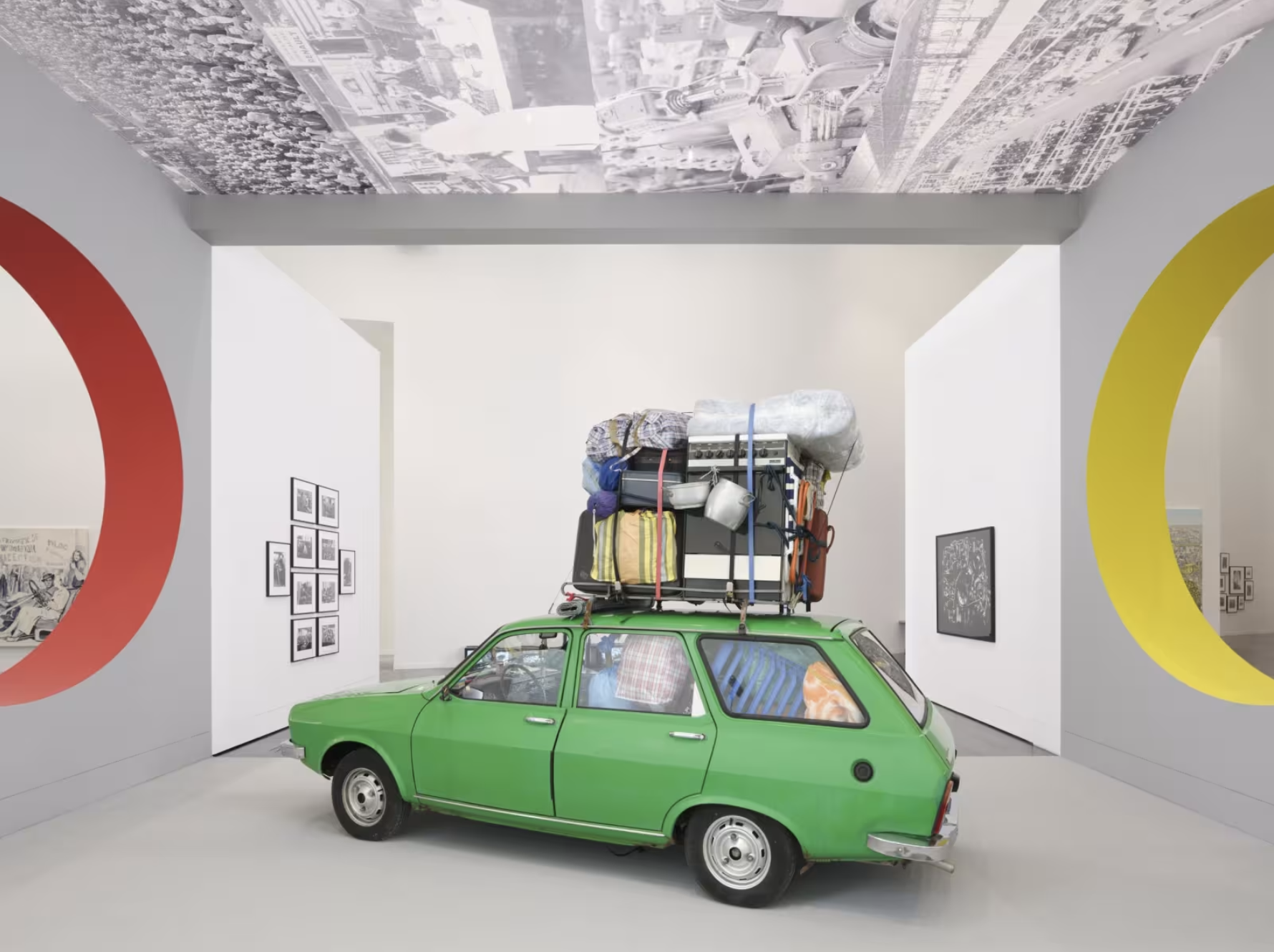
Exhibition view, Moteur Imaginaire, Large Emerige, Paris, 2026.
Large is the new, giant arts centre in the suburbs of Paris, the foundation of the real estate group Emerige. The long-awaited space just opened in Boulogne-Billancourt. One must not be afraid of distances: it does take an hour to get there and back from central Paris, but the show is packed with 20th-century masterpieces. Large stands on the site of the former Renault factory, once the pride and joy of French production. The factory itself has since been dismantled; the building we see today is entirely separate from it. However, as a tribute to the past, the curator Cecilia Alemani put together some of the best works from the Renault collection: Arman, Vasarely, Julio Le Parc, Jean Tinguely, Simon Hantaï. The works are chosen around the themes of cars and movement, and the selection is smart. The show also commissioned seventeen works from contemporary artists, including Bianca Bondi, Oliver Beer, Thu-Van Tran and Sara Sadik. If you like cars, that’s the place to go.
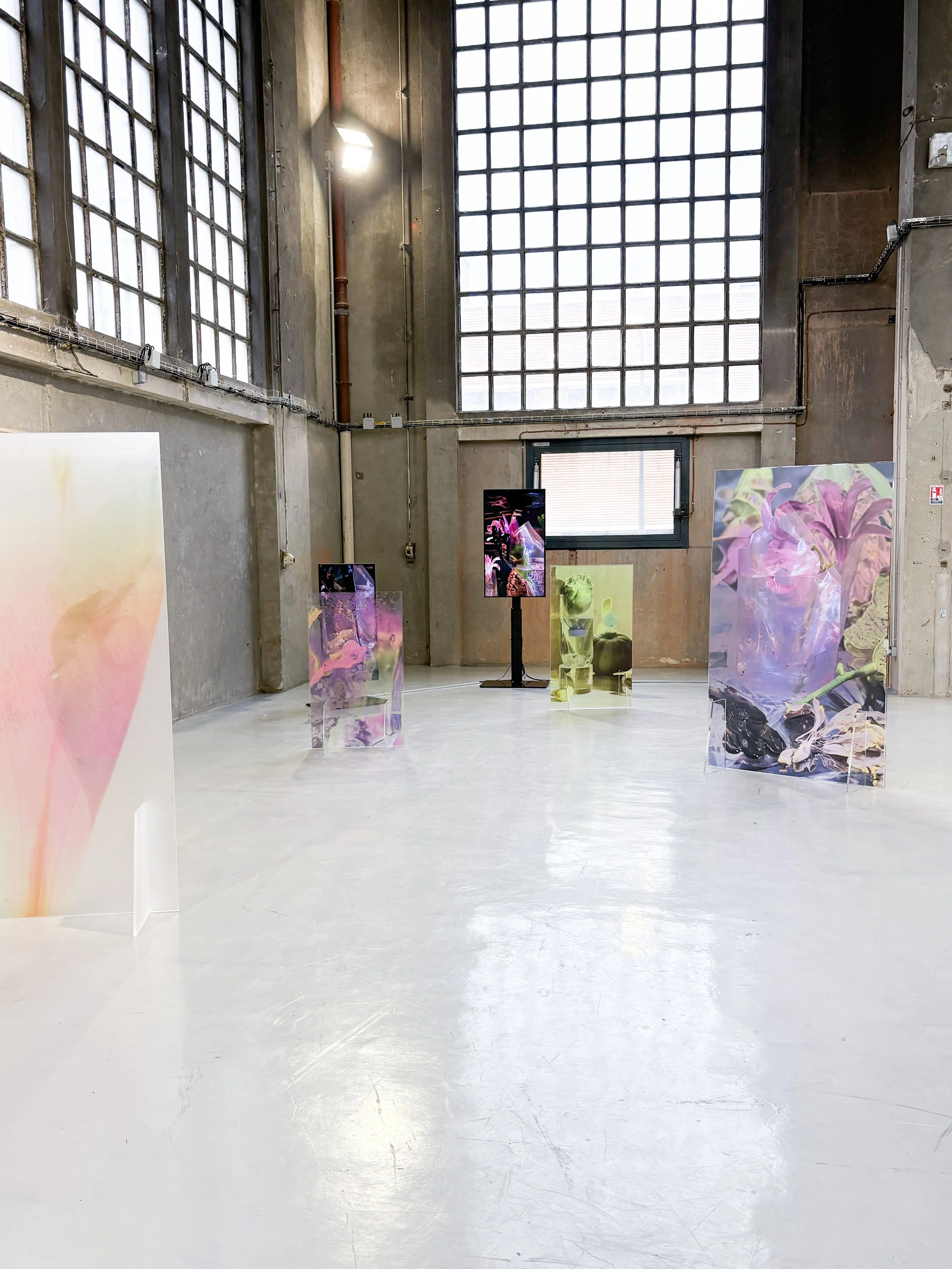
Exhibition view, Rester vivant(e), Fondation Fiminco x Plateforme 10, Paris, 2026.
If, however, you want to see what’s cooking in Swiss contemporary art right now, Plateforme 10 teamed up with Fiminco for the show Stayin’ Alive. Plateforme 10 is a coalition of 3 Swiss institutions (mudac, Photo Elysée and the MCBA), each inviting two artists or duos. I found the show inspiring, poetic, creative, somewhat sad and somewhat hopeful. Artists show metal sculptures, moving images, 3D sea sponges, printed canvases and plants in eerie vases. The soundscape is cleverly shared amongst the artists; one feels like stepping into a speculative matrix with snippets of possible futures. I recommend.
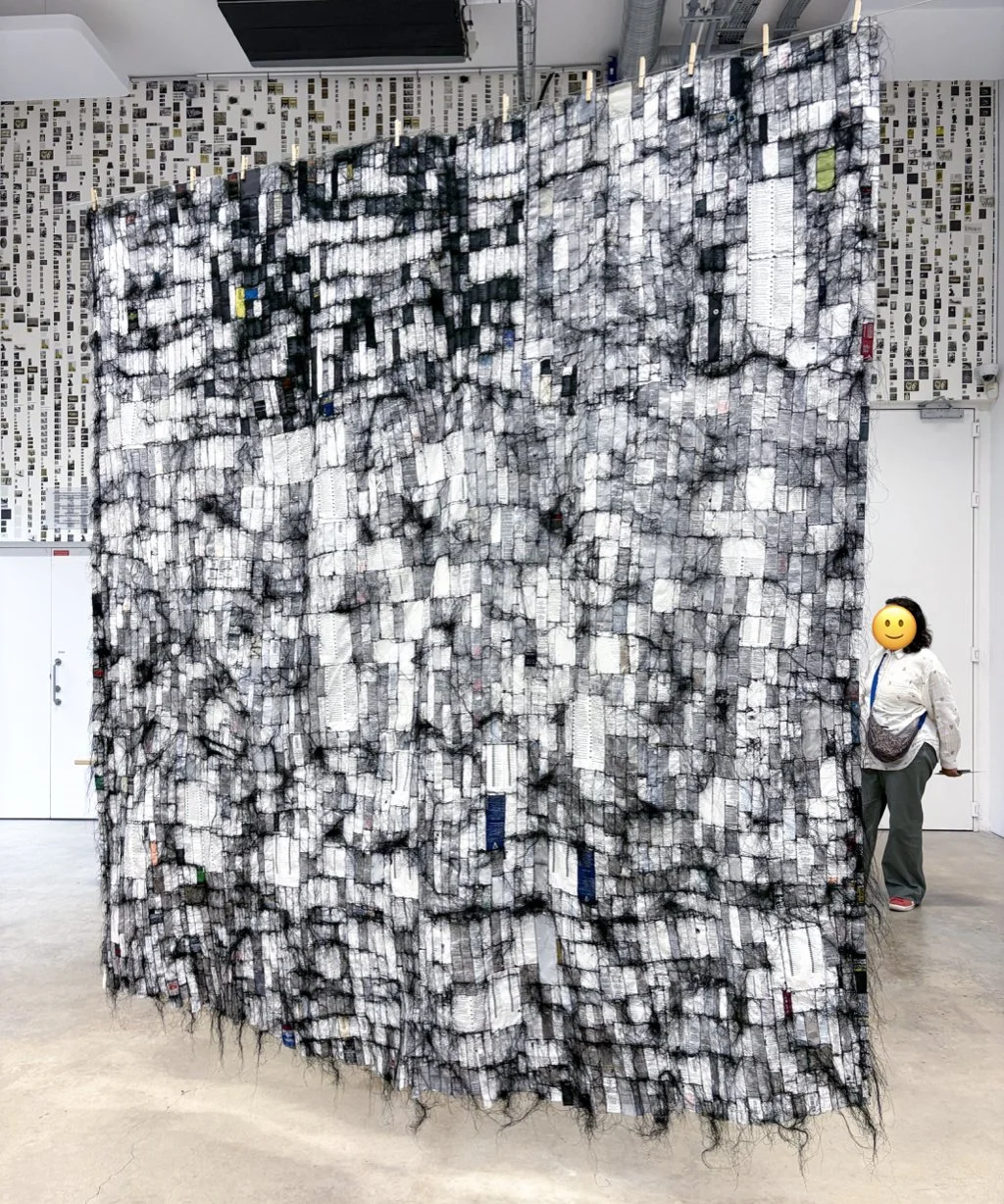
Mise à l’honneur #O, Dalila Mahdjoub, 2008. Les Réserves, Frac Ile-de-France, 2026
If you’re at Fiminco, you might as well see the Frac Réserves exhibition Des gestes de nos mondes, even though it didn’t speak to me at all: an extremely dense exhibition with works that are anything but self-explanatory. It’s a show that requires a textbook prior to seeing it…
Overall, unfortunately, Komunuma is losing ground. After the departure of Jocelyn Wolff and the closing of Air de Paris, the place looks a bit deserted.
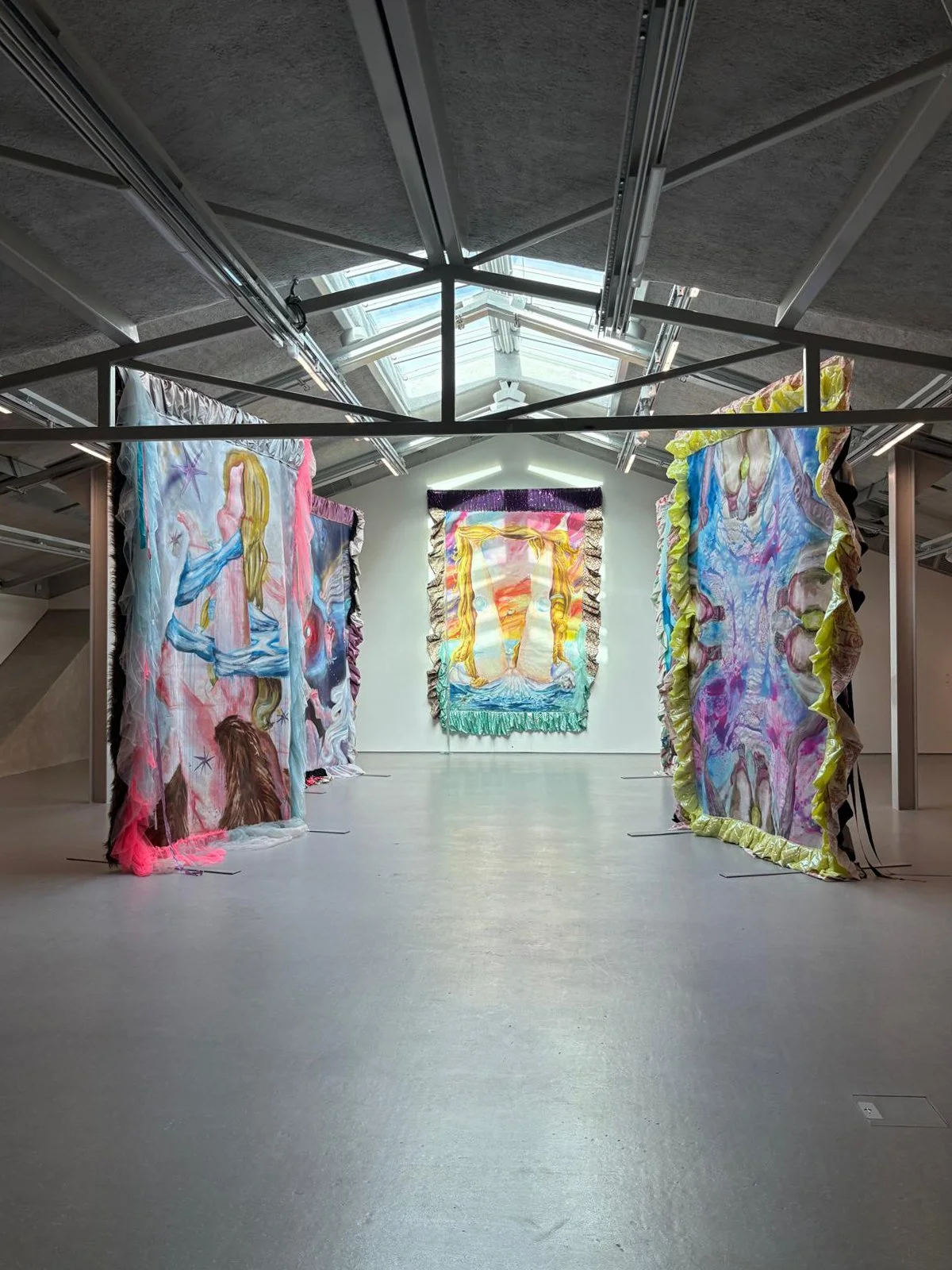
Exhibition view, Le Grand Drame, Klodin Erb, Centre Culturel Suisse, 2026.
Going back to the Swiss wave, the Centre culturel suisse shows an installation of paintings and videos by Klodin Erb, inviting us into a sort of archeological exploration of the painted surface. Her double-sided canvases hang from the ceiling, each with a custom frame of frou-frou fabric, like surrealist mirrors. You step in on one side and get out on the other. The sheer size of these monumental works makes it hard to grasp an overall view, but with a bit of work you realize that what seemed abstract at the beginning becomes a POV. Bodies, mostly limbs, float in a sort of celestial soup. One thing not to miss: the pantyhose series.
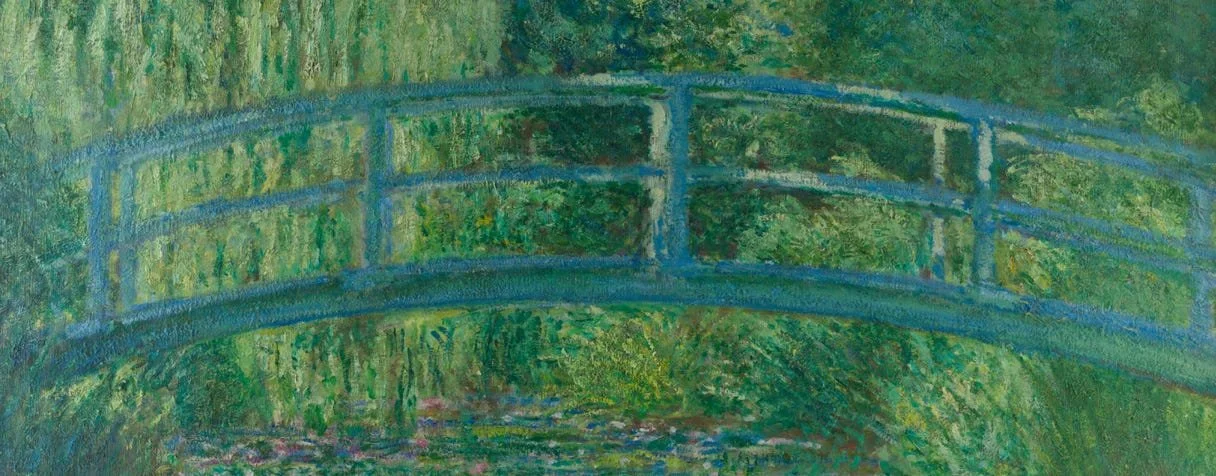
Claude Monet, Le Bassin aux nymphéas, harmonie verte, 1899 Musée d’Orsay Legs comte Isaac de Camondo, 1911 © GrandPalaisRmn (musée d’Orsay) / Stéphane Maréchalle
And finally, a couple of words about the Monet show at the Orangerie — it’s exactly what you would expect from a Monet show at the Orangerie, and frankly I don’t know where they got this ingenious idea to show Monet at the Orangerie. Many of the works on show are part of the permanent collection and on permanent display at the Musée d’Orsay. So now, if you want to see them, you have to cross the river.
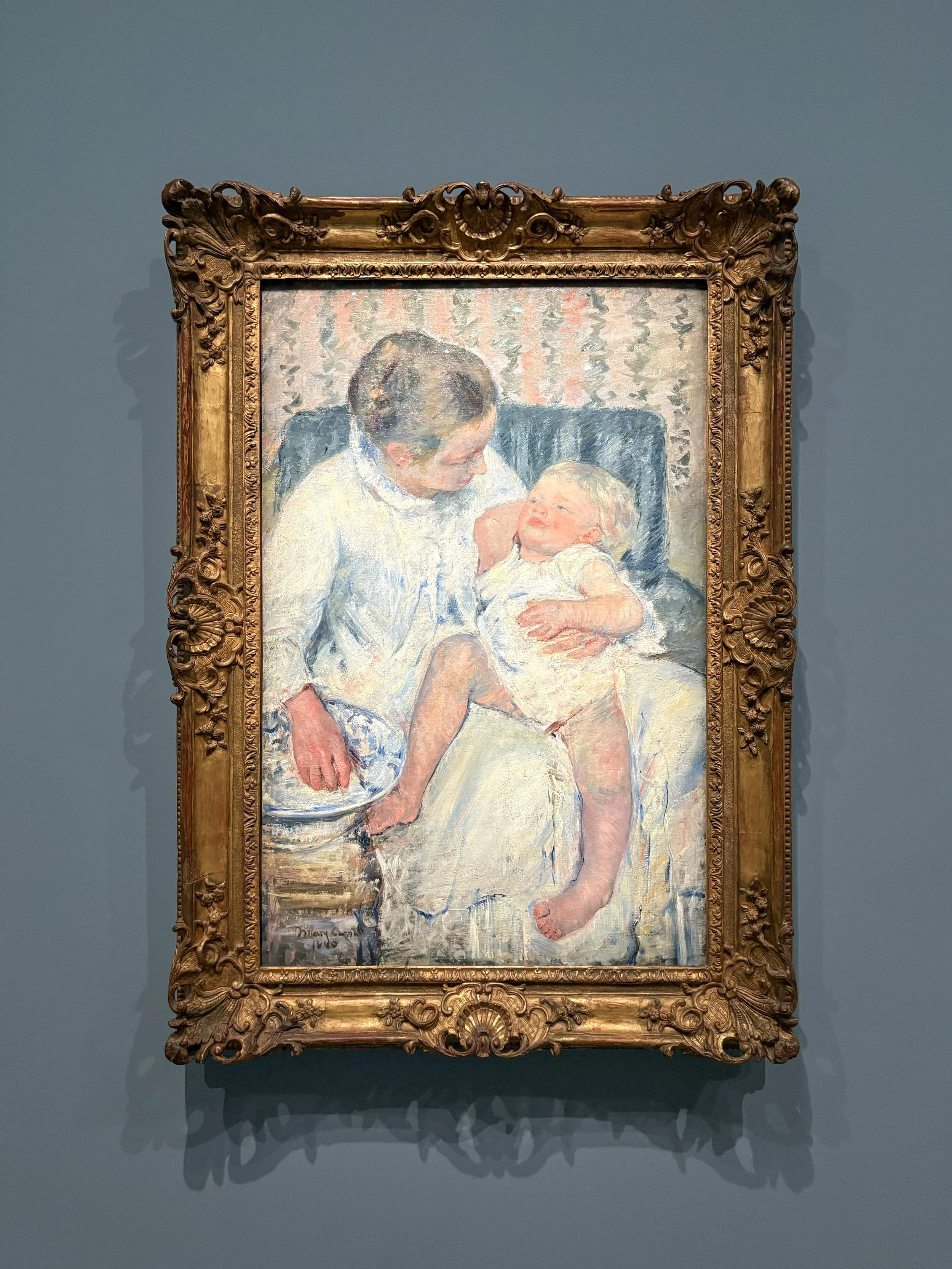
Marie Cassatt, Mother About to Wash Her Sleepy Child, 1880. Musée d’Orsay, Paris, 2026.
Mary Cassatt at the Orsay is, on the other hand, a much better idea. The show is quite expansive and it feels like you do learn more about this artist. Sure, there is a very wide variety of “mother with child” paintings, which is not my favorite genre, to say the least, but what is a woman painter to do when those are (1.) the subjects available and (2.) the subjects that sell?
Mary Cassatt did become financially independent in her lifetime, joined the suffragettes, decorated the Woman’s Building at the 1893 World’s Fair in Chicago, and even bought a castle. If that isn’t success?
I wish you all a busy and successful Art Week in Paris.
Bisous.
Seen this month:
Le Grand Drame, Klodin Erb, Centre Culturel Suisse
Terrain Meublé , Monika Emmanuelle Kazi, Centre Culturel Suisse
Moteur Imaginaire, Large Emerige
Voir Tahiti, Le Musée du Quai Branly
Premières Nations, Le Musée du Quai Branly
L’indépendante, Mary Cassat, Musée d’Orsay
La ligne et l’image, Andy Warhol, Musée du Luxembourg
Eternel Tintoret, Musée Jacquemart-André
Zurbarán, Musée du Louvre
Gustave Fayet, collectionneur-créateur, Fondation Louis Vuitton
Remember me, Bourse du Commerce Collection Pinault